Description
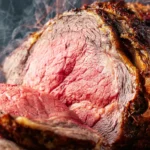
This standing rib roast is an impressive dish that requires some planning but yields incredible results.
Ingredients
Scale
- 1 (6-pound) bone-in standing rib roast (fat trimmed to about 1/2 inch)
- to taste kosher salt
- to taste freshly ground black pepper
- 4 tablespoons unsalted butter (softened)
- to taste fresh rosemary and/or thyme
Instructions
- Before You Begin: This recipe is mostly hands-off, but it does need a little planning ahead. Please take a moment to read through the steps so you can give the roast the time it needs. Ideally, season the roast 24 hours ahead for the best flavor and texture. Allow for about 2 hours resting at room temperature before cooking, which will take 3–4 hours depending on oven temperature and roast size. A long rest (30–60 minutes) happens before the final sear, which is quick (5–10 minutes), followed by a short rest before slicing.
- Seasoning: Generously season the rib roast on all sides with kosher salt 24 hours before cooking. Place the roast on a rack over a baking sheet and refrigerate loosely covered to allow the surface to dry and the salt to penetrate deeply into the meat.
- Preparation Before Roasting: Remove the roast from the refrigerator around 2 hours before cooking to allow it to come to room temperature. Optionally, mix the softened butter with freshly ground black pepper and herbs, and slather it evenly over the roast. If not using butter, simply season the roast generously with black pepper.
- Prepare for Roasting: Preheat the oven to 200°F–225°F. Place the roast fat side up on a roasting rack set in a large roasting pan, or on a wire rack inside a rimmed baking sheet. Insert a meat thermometer into the thickest center portion of the roast, avoiding the bone.
- Low-Temperature Slow Roast: Roast until the internal temperature reaches a comfortable level for you, which refers to when the roast is removed from the low-temperature oven before the final high-heat sear. For rare, pull at 120–125°F; medium-rare at 130°F; medium at 135°F; USDA recommended minimum at 145°F. At 225°F, cook for about 30 minutes per pound; at 200°F, about 30–45 minutes per pound. Total cook time will typically be 3 to 4 hours, but always rely on temperature, not the clock.
- Resting: Remove the roast from the oven and tent it lightly with foil. Let it rest at room temperature for 30 to 60 minutes, allowing juices to redistribute.
- High-Temperature Searing: Increase the oven temperature to 450-500°F. This step can produce smoke, so take precautions as needed. If excessive fat collects in the roasting pan, transfer the roast to a clean pan to minimize smoking. Once fully preheated, return the roast to the oven and sear for 5 to 8 minutes, just until a deep brown crust forms.
- Final Rest and Serving: Remove the roast from the oven and let it rest for a few minutes. Carve into slices and serve immediately.
Notes
- Planning is essential for this recipe to achieve the best flavor and texture.
- Consider variations in cook times based on the size of your roast.
- Remember to allow sufficient time for resting before serving.
- Prep Time: 24 hours
- Cook Time: 3-4 hours
- Category: Main Course
- Method: Roasting
- Cuisine: American
Nutrition
- Serving Size: 1 slice